
TERRACED GARDEN
Hear Leah talk about designing this garden and how grasses can support butterflies on this episode of the Horticulturati podcast:
THE TERRACES
The center of Pollinators’ Paradise is a set of terraced beds built on the footprint of a former house. This is an unusual garden rooted in the story of Austin’s housing market. A ranch house built in the 1960s and owned by one family, the Wilsons, came up for sale in 2022. The market value of the land far exceeded the value of the house, so the expectation was that the house would be torn down and replaced by a much larger home. Jo Clifton and Roger Duncan decided to preempt this prospect: tear it down, join the lots, and build a garden. As avid environmentalists and birders, they dreamed of carving a wildlife oasis that would help to mitigate habitat fragmentation and overbuilding in the neighborhood they’ve long called home.
HARDSCAPE
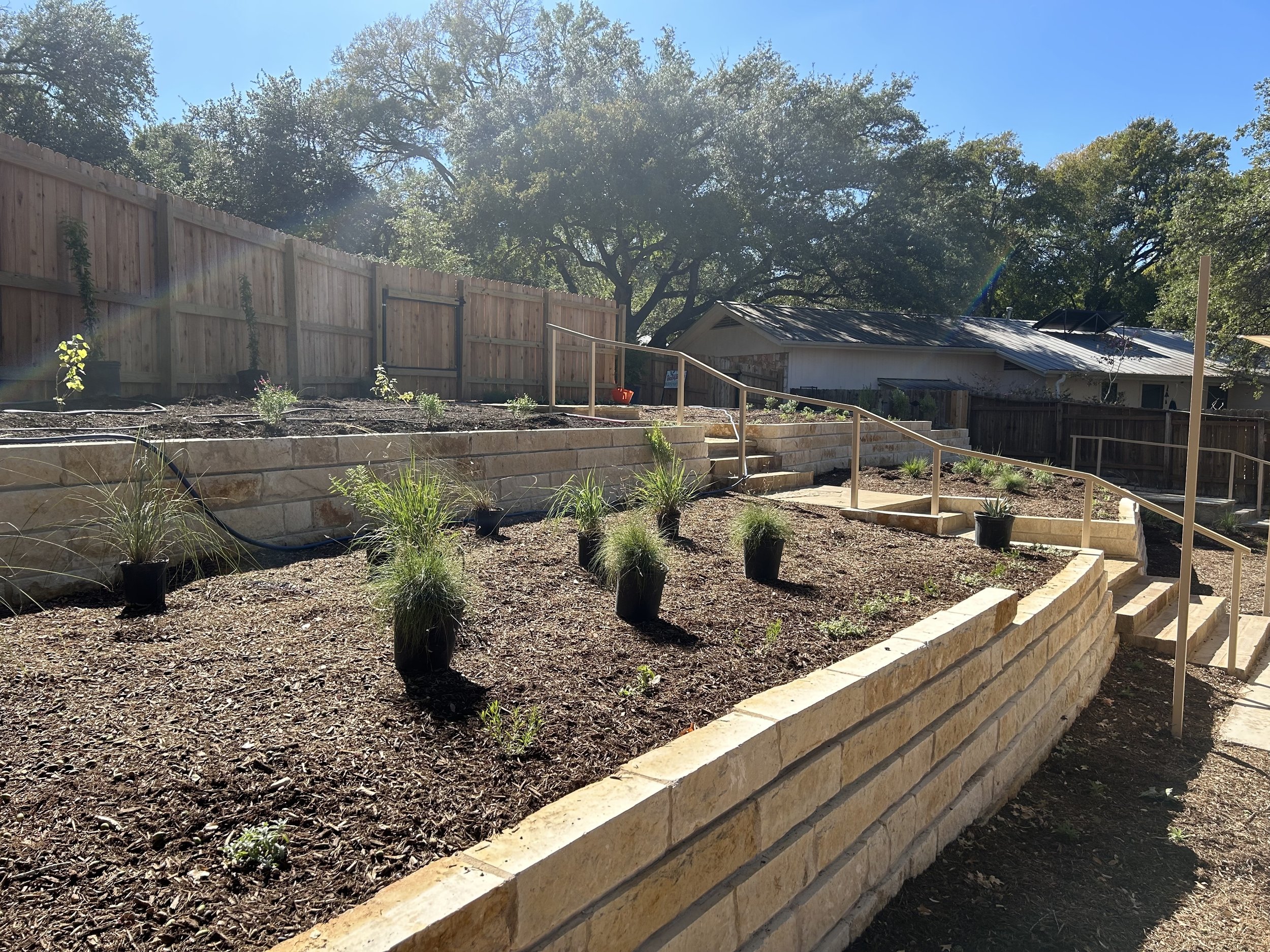
While the house was still standing, Roger had a vision for the landscape. The front and back yards would stay mainly the same, and the footprint of the house would be replaced with terraced beds, a grand central stair, and maintenance stairways flanking either end. The slope made it obvious that terraces and stairs would be necessary; the single-story home sat on a slab that was at ground level in front but eight feet tall in the back.
We presented Seedlings Landscape Design-Build with a basic plan for the hardscape before the house was demolished. They engineered our rough ideas into reality and built everything: walls, stairs, paths, and fencing. The terraces are filled with the existing soil from under the house. Assuming that the native soil would be better for native plants than any imported soil, we only brought in compost and mulch. Online drip irrigation is built into the beds to get plants established.
Demolition of the house, construction of the hardscape, and initial planting occurred within six months in 2023. (Scroll to the bottom of this page for photos of the house before and during demolition and construction.)
PLANTS
TOP TERRACE
The sunny top terraces inside the fence comprise the hummingbird garden. Several hummingbird species migrate through central Texas in the spring and fall. They are attracted to red, orange, and pink flowers with tubular or trumpet-shaped buds. Plants for hummingbirds in this garden include shrubs (cenizo, flame acanthus, red yucca), perennials/biennials (canna, lantana, salvia greggii, lyre-leaf sage, standing cypress, turk’s cap), and vines (crossvine, Mexican flame vine).
This area doubles as a cut-flower garden with exotic annuals that attract many butterfly species. This year, the Monarch and Queen butterflies were especially drawn to Mexican Sunflower (Tithonia rotundifolia), which is very drought tolerant and easy to grow from seed.
Monarch on Mexican sunflower.
Queens.
MEZZANINE
The center terrace, or “mezzanine,” is an experiment in matrix planting, a design method focused on plant communities. Plants of varying heights form tight-knit groups that form a living mulch, densely covering the ground to conserve moisture and prevent weeds. Our Texas-style matrix includes a low layer of groundcovers (wooly stemodia, snakeherb, Webberville sedges), medium-height perennials (salvias and coneflowers), tall grasses (muhlys, little bluestem, and Indiangrass), trees, and shrubs. The two anacacho orchids are designed to create an archway over the stair. Desert willow and weeping elbow bush feed birds and are host plants for caterpillars. Indiangrass, little bluestem, tall goldenrod, datura, and fennel are also host plants. Bumblebees are especially fond of ‘Mystic Spires’ salvia.
East mezzanine, May 2025.
West mezzanine, May 2025.
West mezzanine, May 2025.
GROUNDCOVER GARDEN
The bottom terrace is the groundcover garden. Most native groundcovers for Central Texas go dormant at some point in the year. By mixing winter-dormant and summer-dormant species, it’s possible to have evergreen cover year round.
The groundcover garden has a sunny side and a shady side. On the sunny west side, frogfruit and Gregg mistflower dominate during the summer and fall, while white yarrow and heartleaf skullcap dominate during the winter. On the shady east side, frogfruit is paired with heartleaf skullcap, yarrow, Webberville sedge, and white avens. A few non-native, well-behaved additions here are ‘Hot & Spicy’ oregano for sun, and ‘Country Girl’ mum for shade.
East side, November 2025.
‘Country girl’ mum, October 2025.
West side, May 2025.
West side, November 2025.
DEMOLITION/CONSTRUCTION PHOTOS
Before
The front yard, 2022.
Front entry interior, 2022.
Backyard, 2022. The 8’ tall concrete slab turned out to be hollow and filled with native soil.
West side yard between properties, 2022.
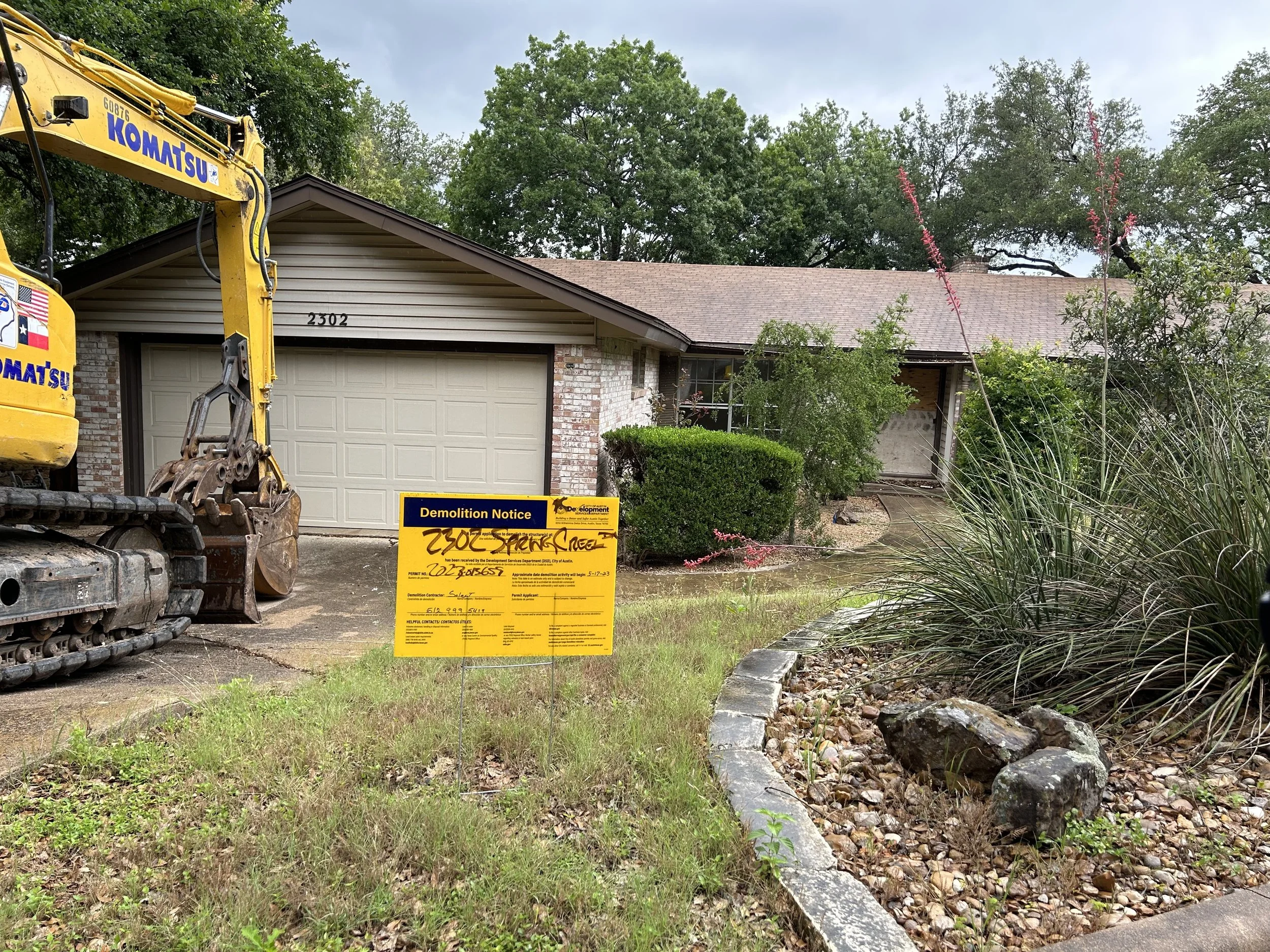
Demolition notice, 2023.
Demolition
Demolition, May 2023.
Demolition, May 2023.
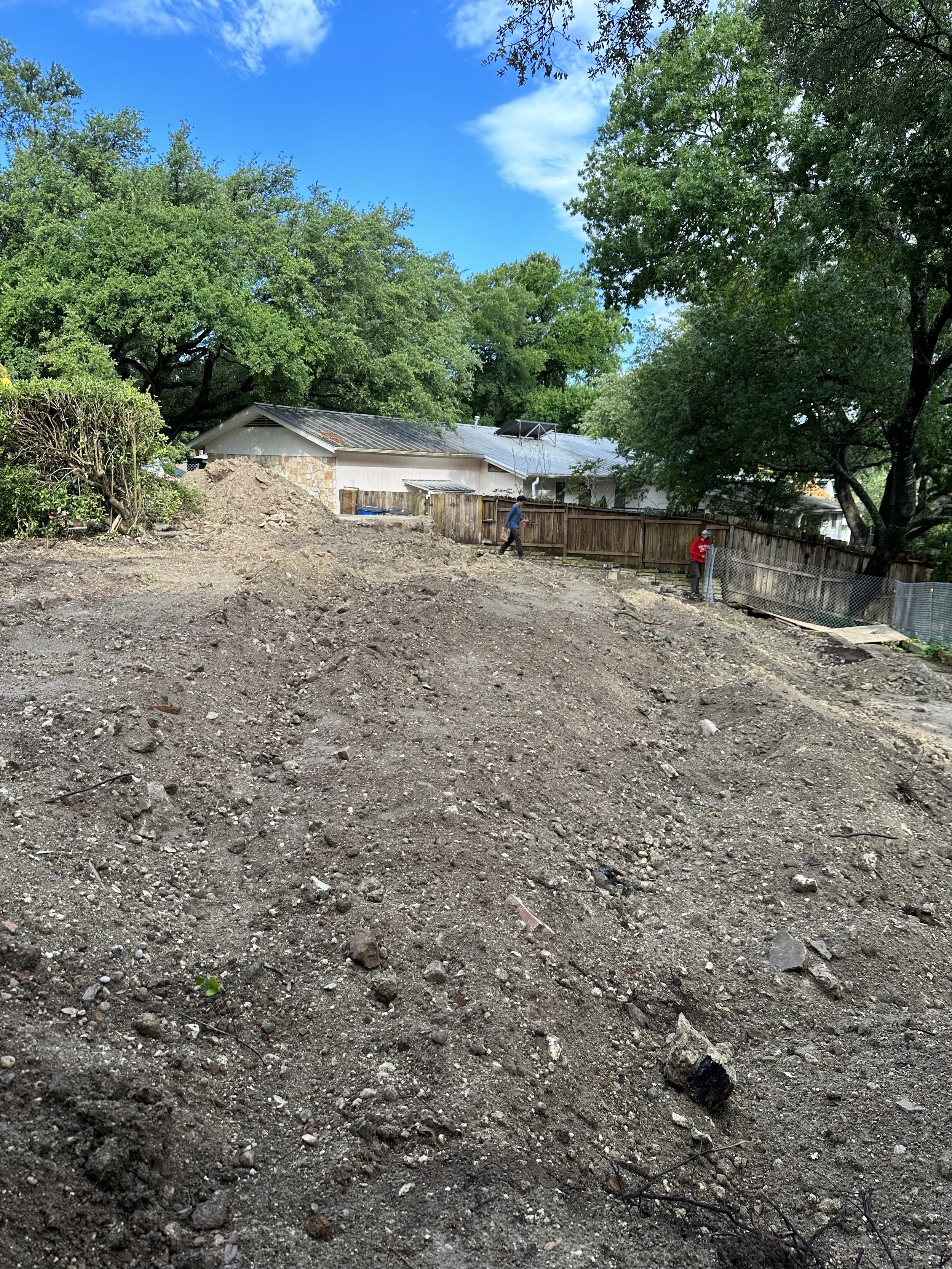
Terraced garden after demolition, Spring 2023.
Construction
Finished hardscape, August 2025.
Finished hardscape, August 2025.
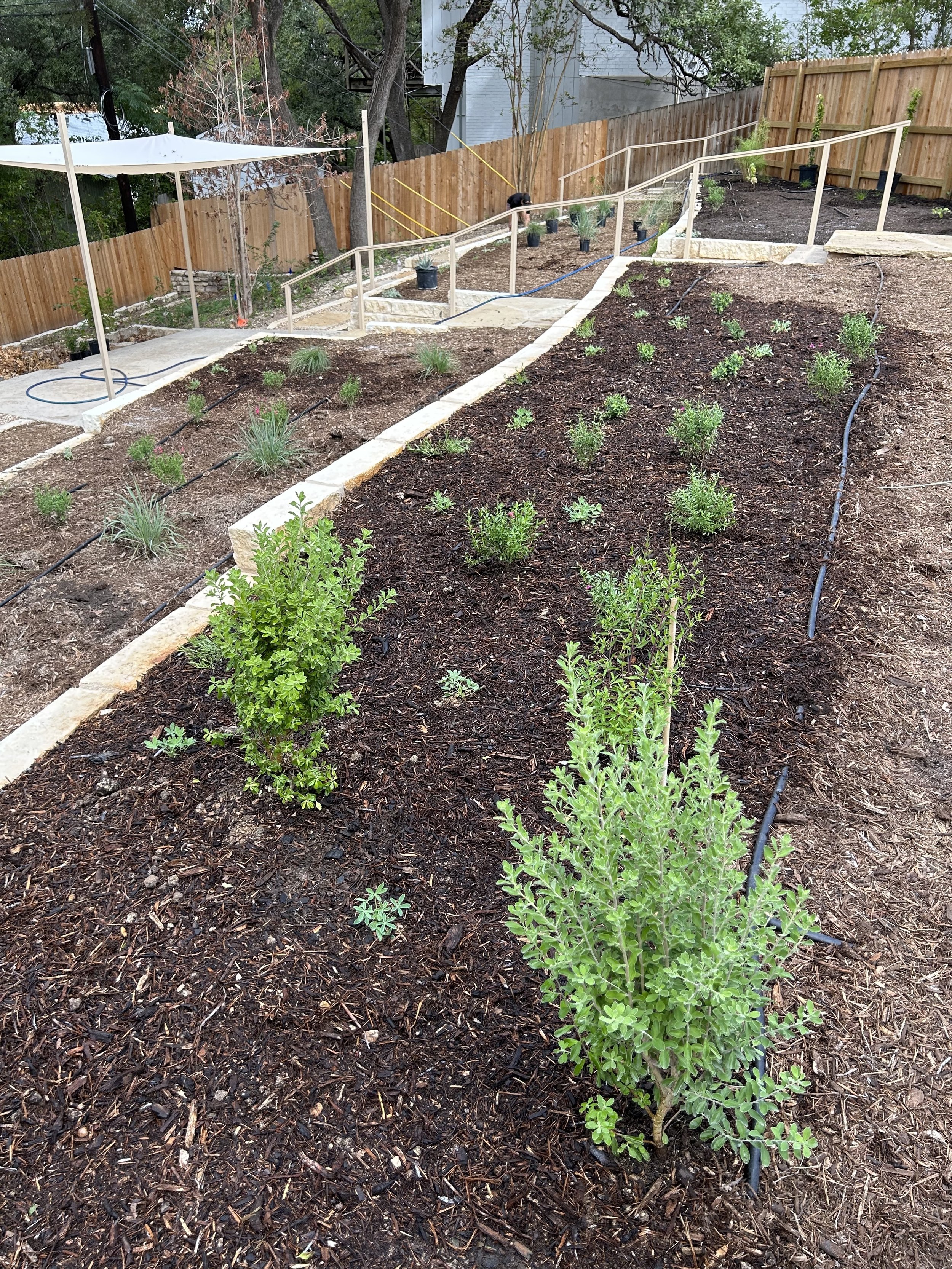
Planting, October 2023
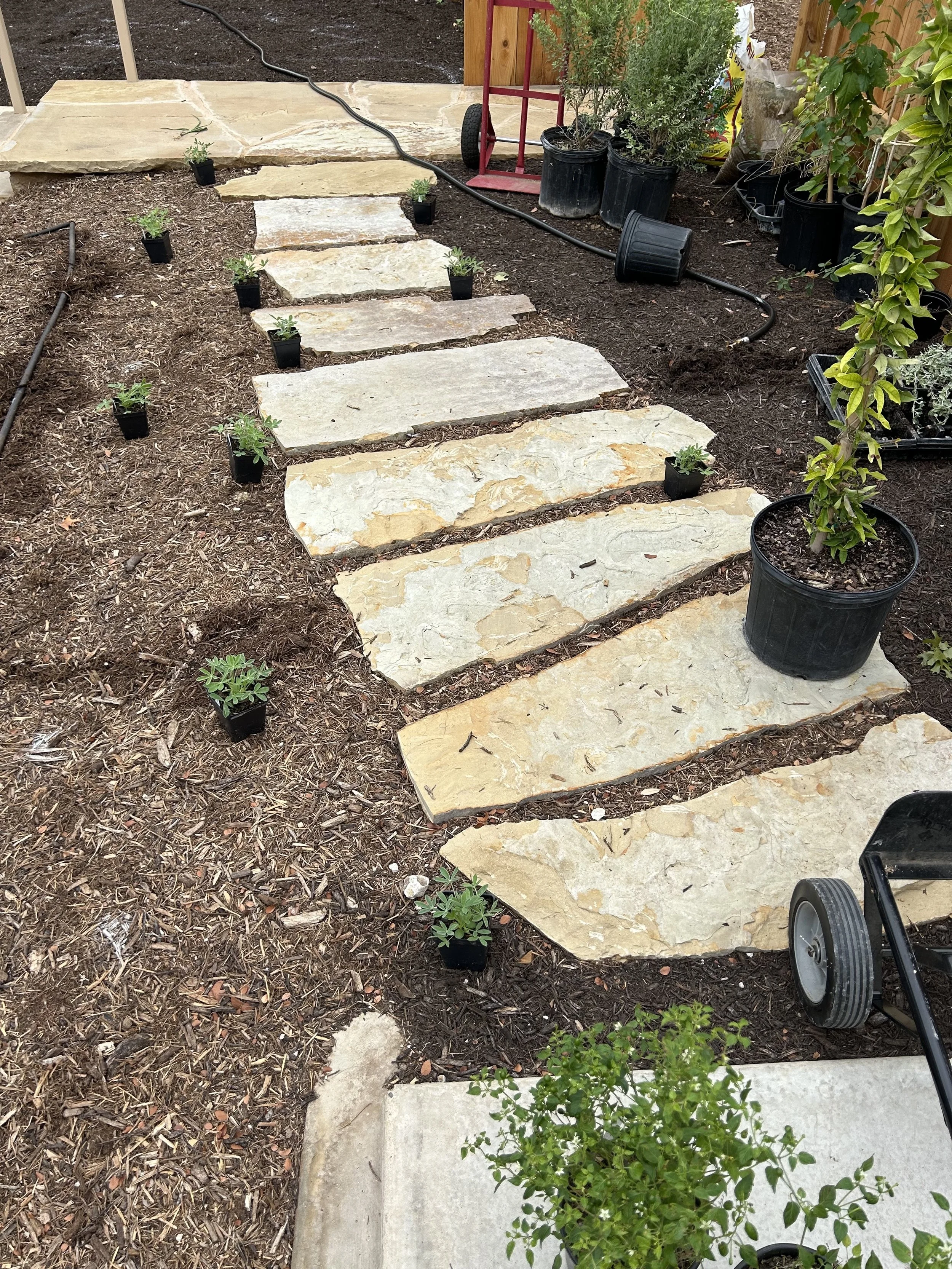
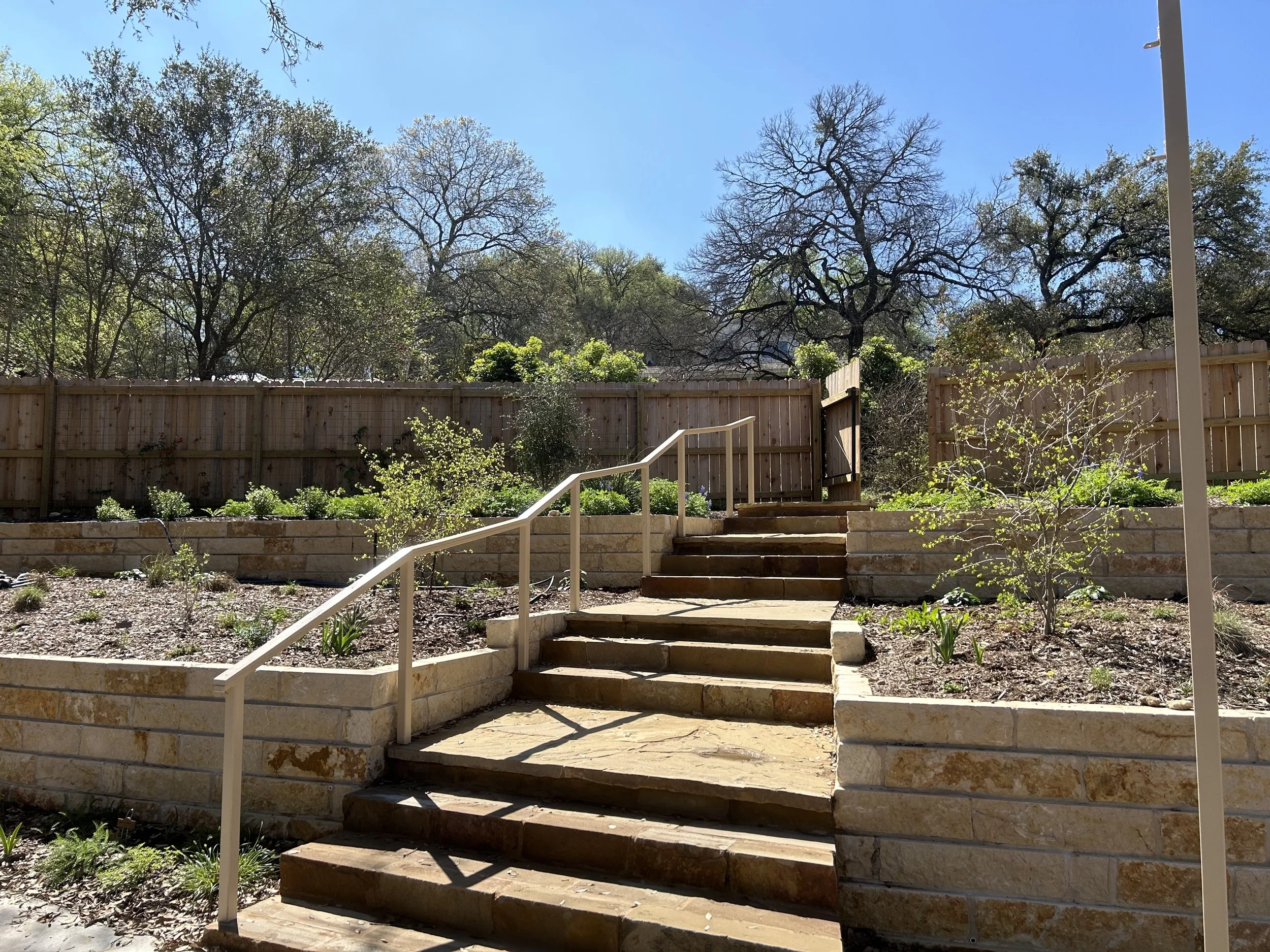
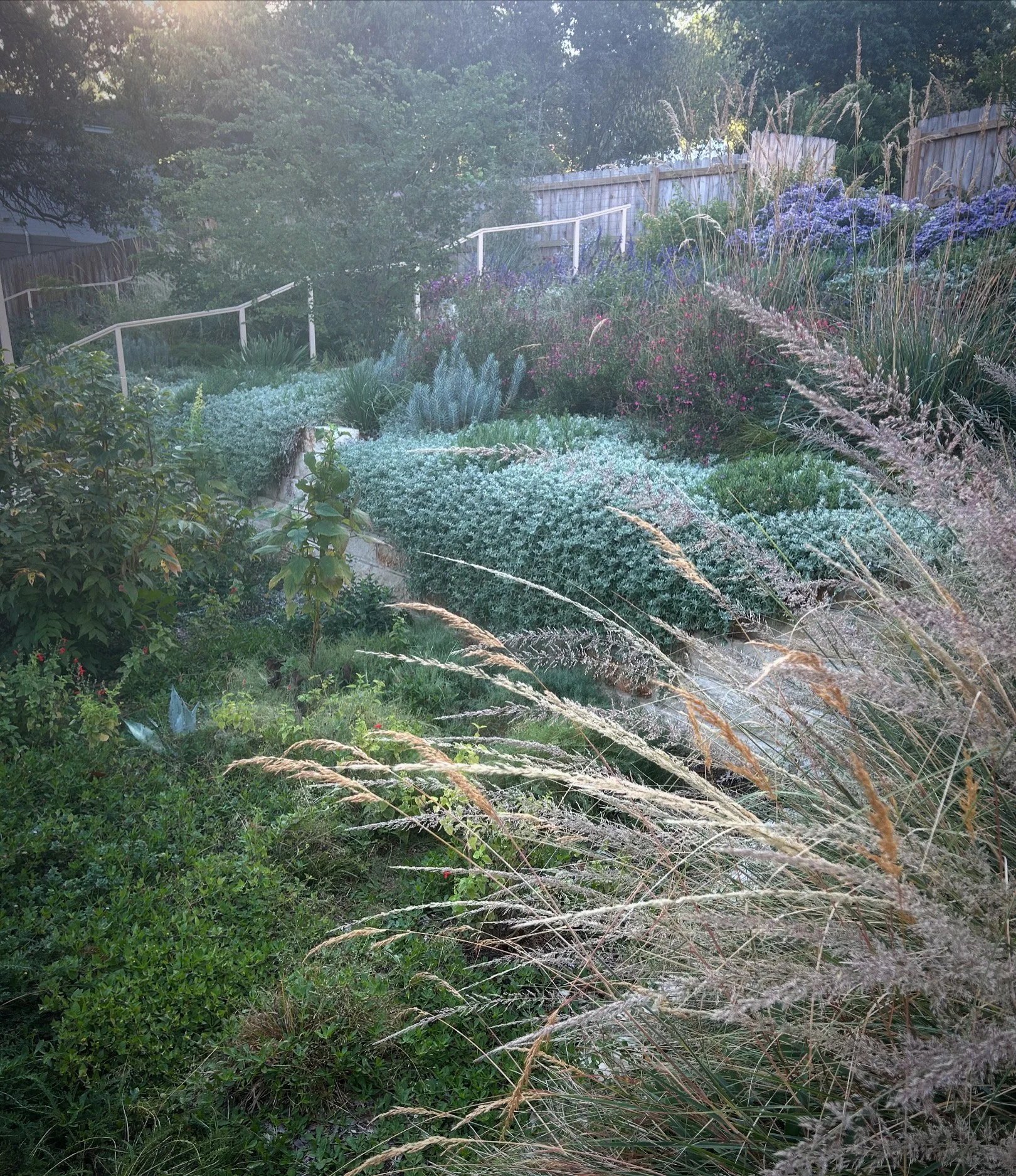
October 2024
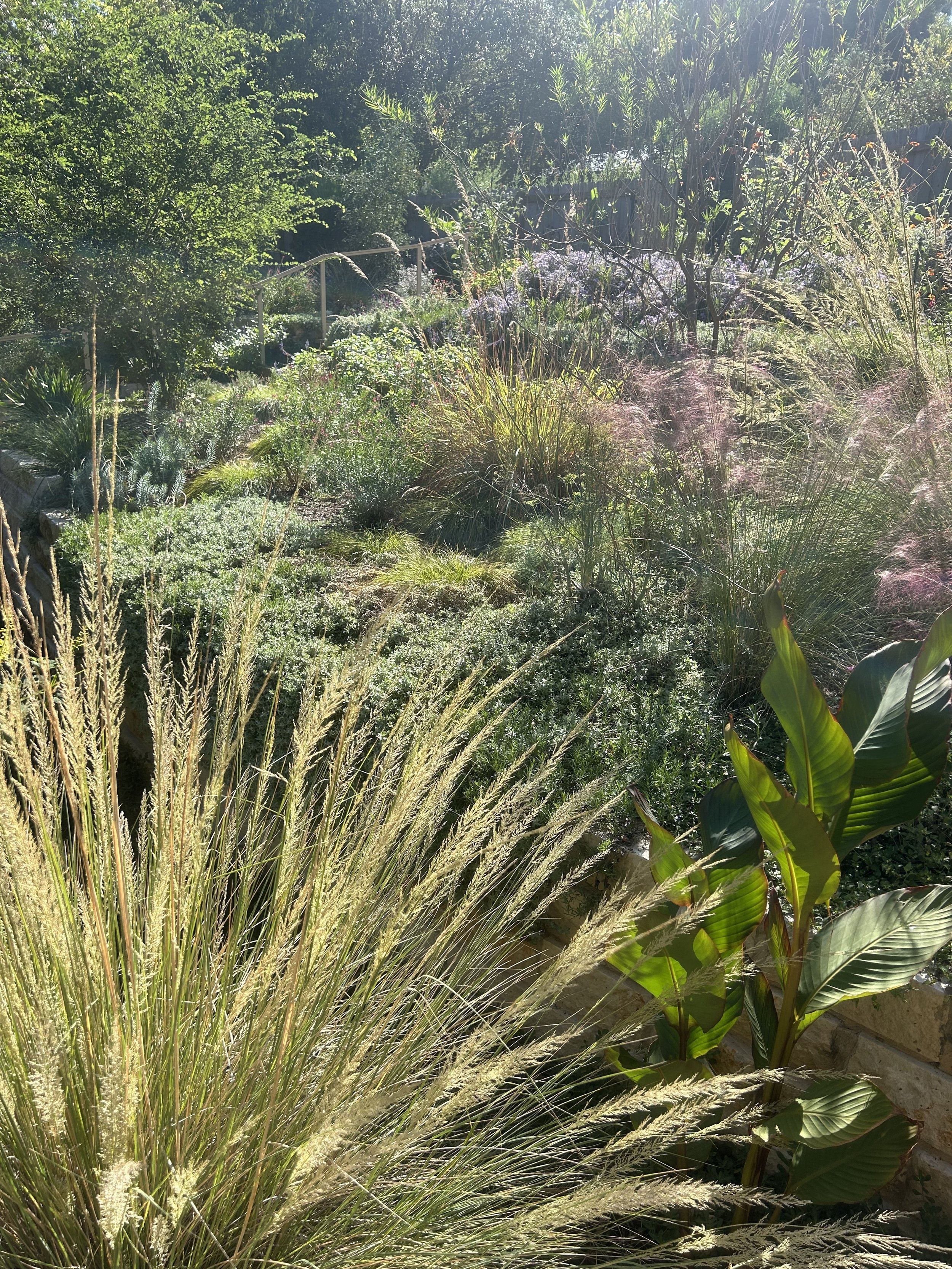
October 2025
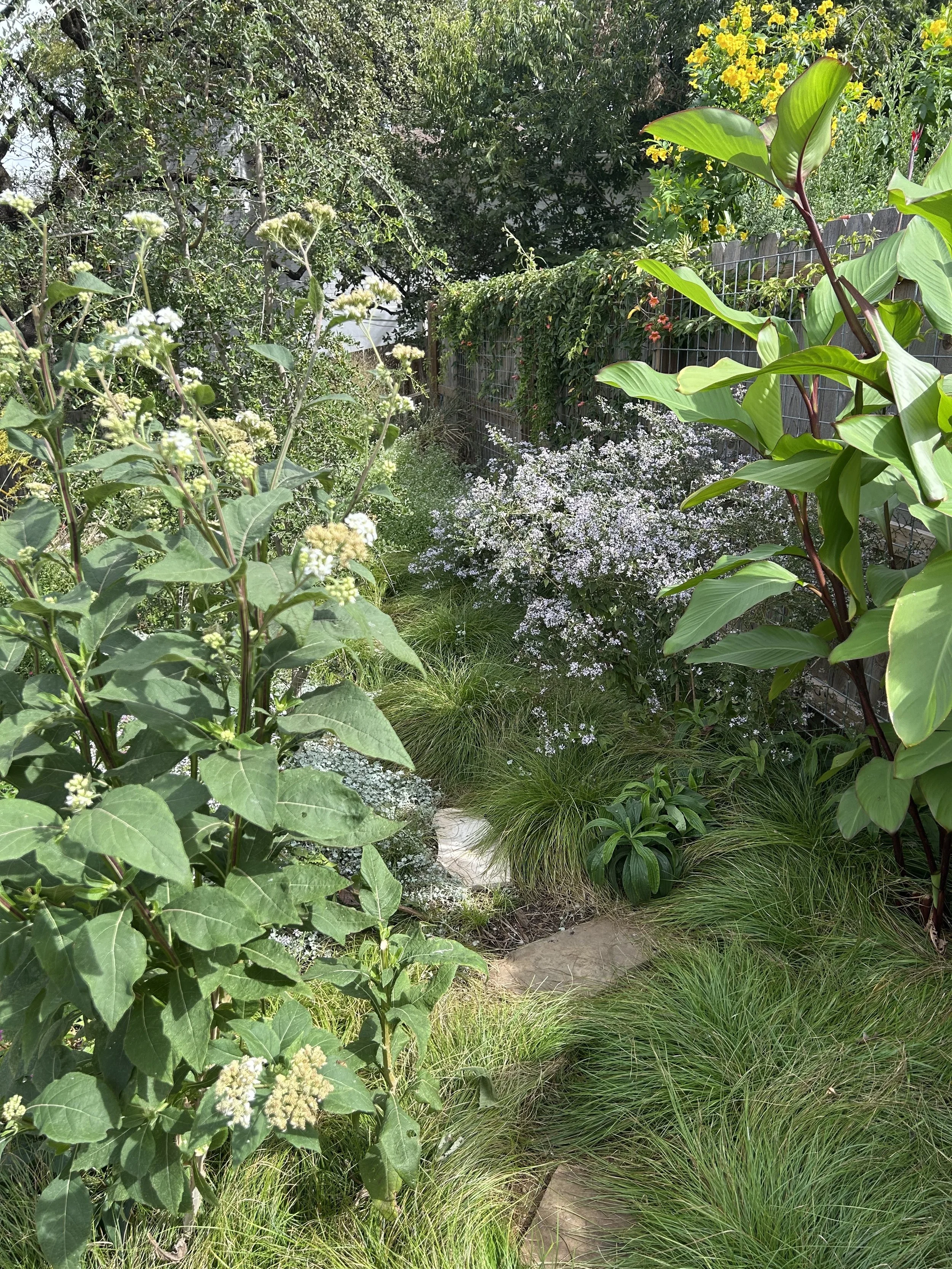
October 2025
Interested in garden design? Visit the Contact Page to get in touch!